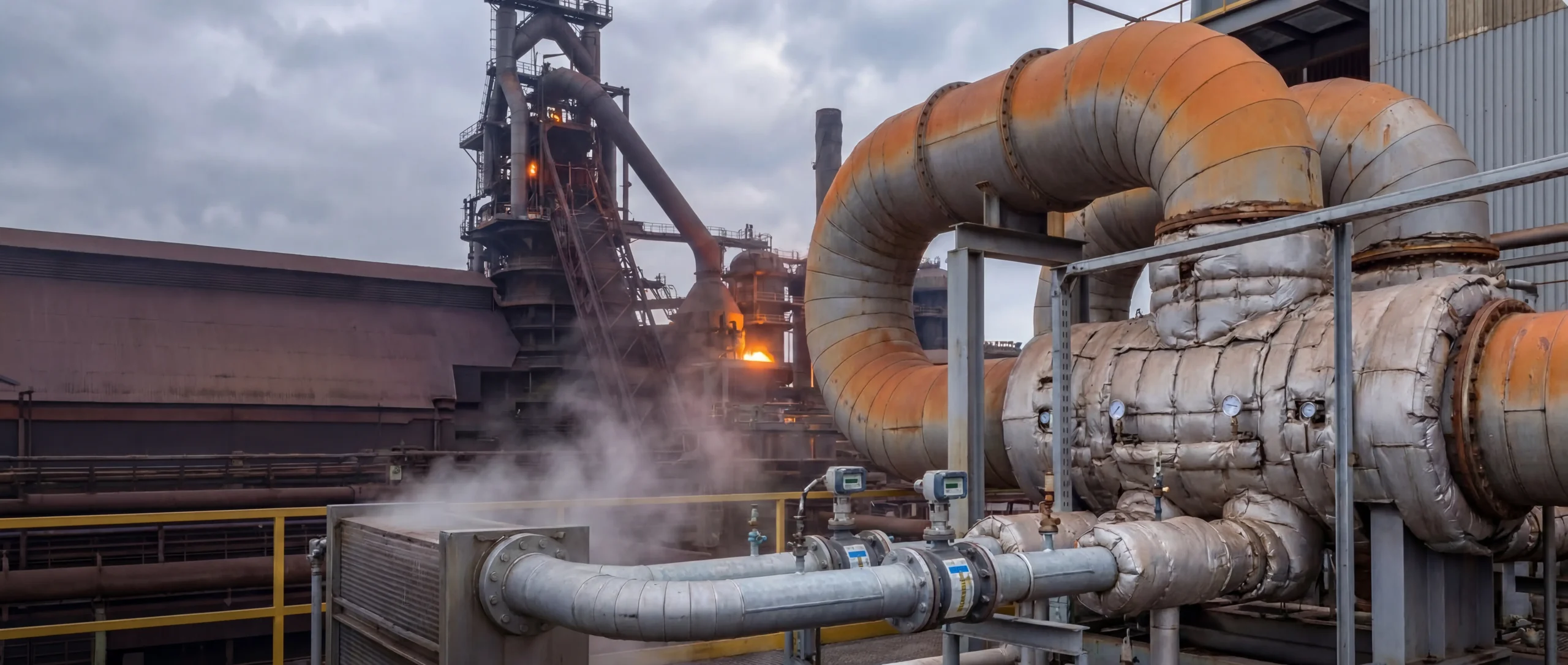
A large integrated steel production facility sought to recover waste heat from
low-temperature flue gas generated by its boiler and utility systems. Conventional metal heat exchangers
experienced severe acid dew-point corrosion, resulting in frequent shutdowns and high maintenance costs.
To achieve deeper heat recovery and long-term reliability, a fluoroplastic-steel low-temperature economizer
system was implemented.
| Item | Value |
| Boiler Capacity | 220 t/h |
| Flue Gas Flow Rate | 680,000 Nm³/h |
| Flue Gas Inlet Temperature | 165°C |
| Flue Gas Outlet Temperature | 95°C |
| Heating Water Flow Rate | 1,050 t/h |
| Heating Water Inlet Temperature | 55°C |
| Heating Water Outlet Temperature | 85°C |
| Flue Gas-Side Resistance | ≤ 850 Pa |
* Project data shown for reference of a typical steel industry waste heat recovery application. *

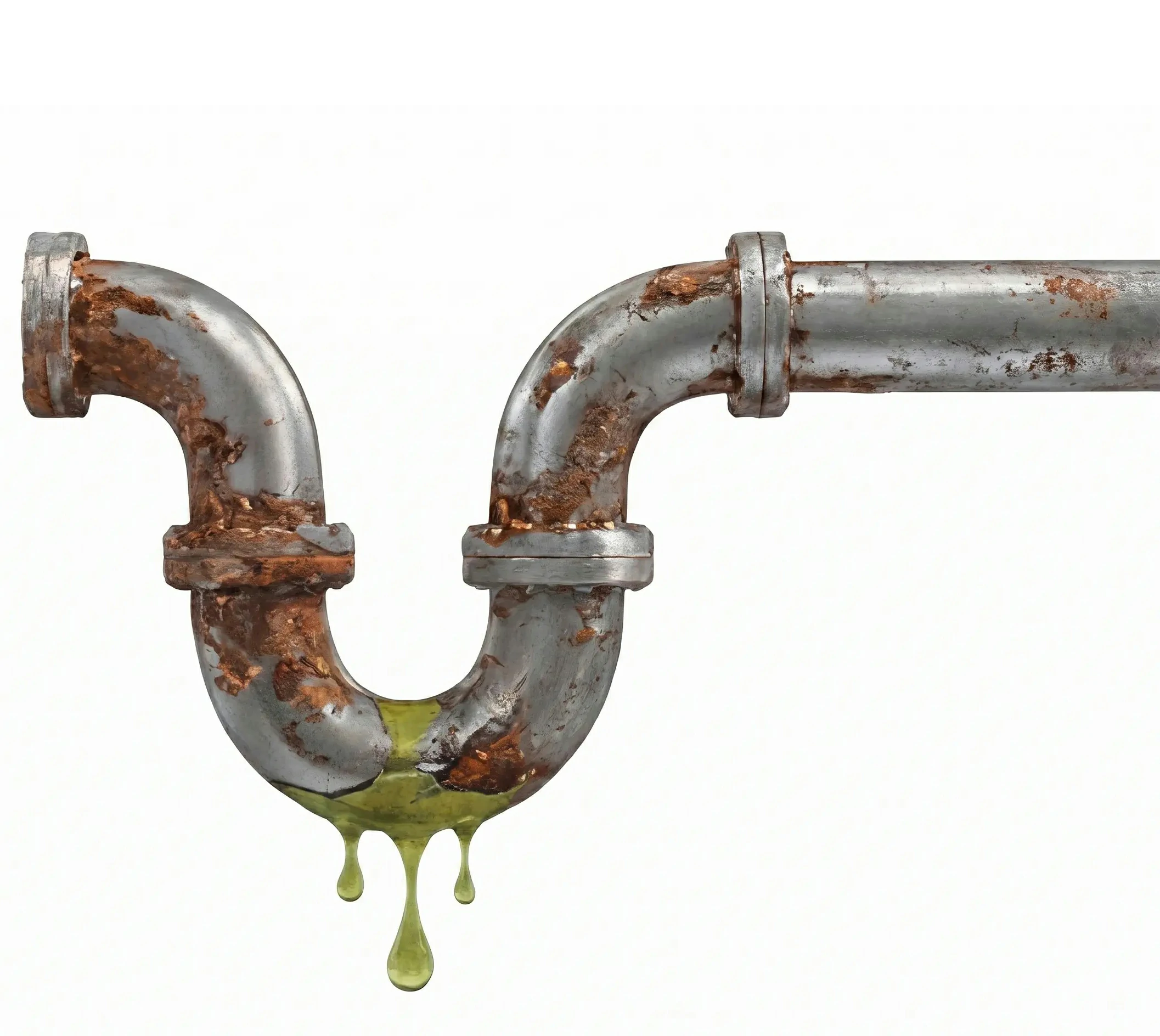
The flue gas contained sulfur compounds and moisture that generated acidic condensate below the dew point temperature.

Conventional metal systems could not safely reduce flue gas temperature below approximately 120°C.

Corrosion-related failures resulted in repeated maintenance and equipment replacement.

Large quantities of usable low-temperature thermal energy were discharged to atmosphere.
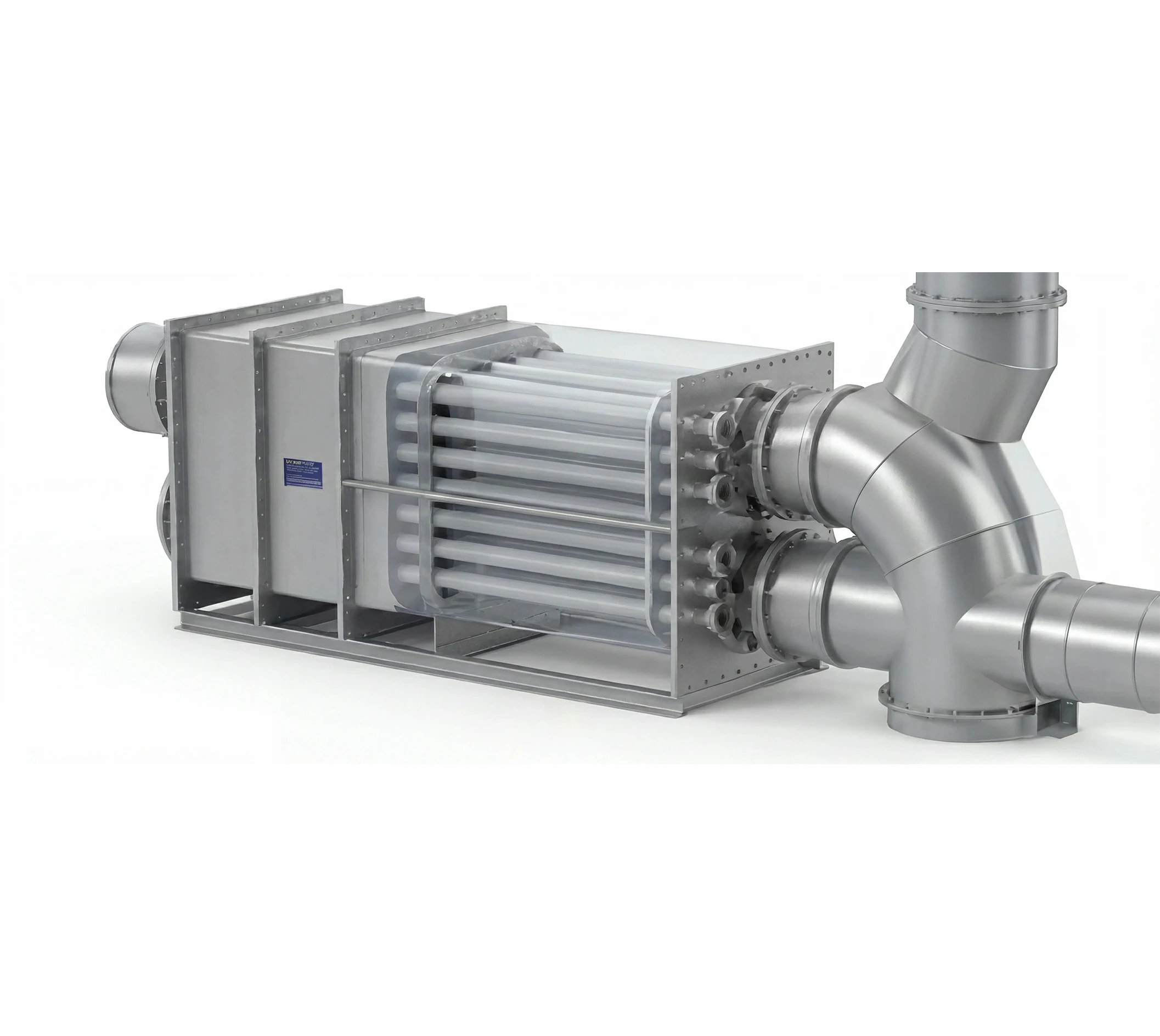
Installed between the induced draft fan and desulfurization tower:
This enabled reliable operation below the acid dew point while maintaining stable heat transfer performance.

Flue gas discharge temperature reduced from 165°C to 95°C.

Significant reduction in corrosion-related shutdowns and replacement cycles.

Recovered heat reused for plant heating water systems.

Continuous operation under acidic condensation and high-humidity conditions.

Recover more usable thermal energy from existing operations.

Reduce utility consumption through waste heat utilization.

Minimize shutdowns caused by corrosion-related failures.

Extended equipment lifespan and lower maintenance expenditure.