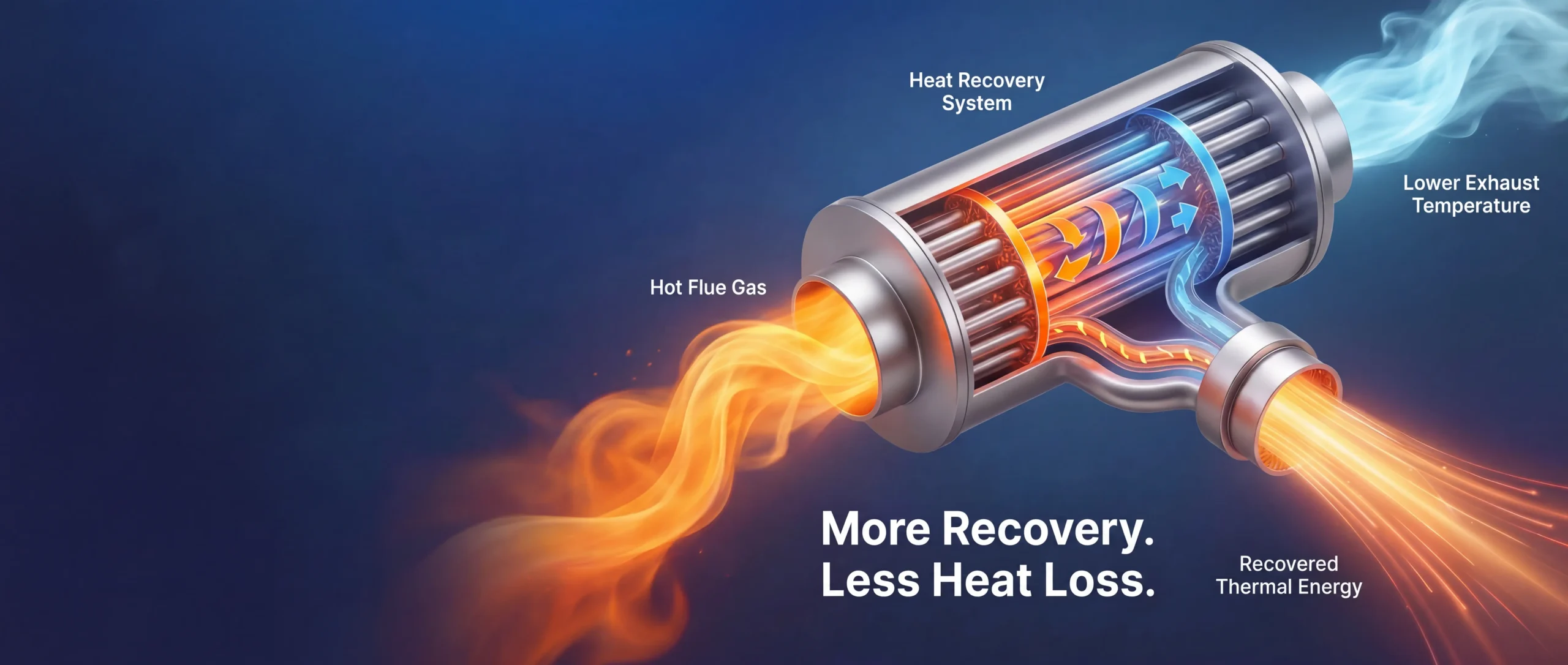
THE CHALLENGE

Why Conventional Systems Stop Recovering Heat

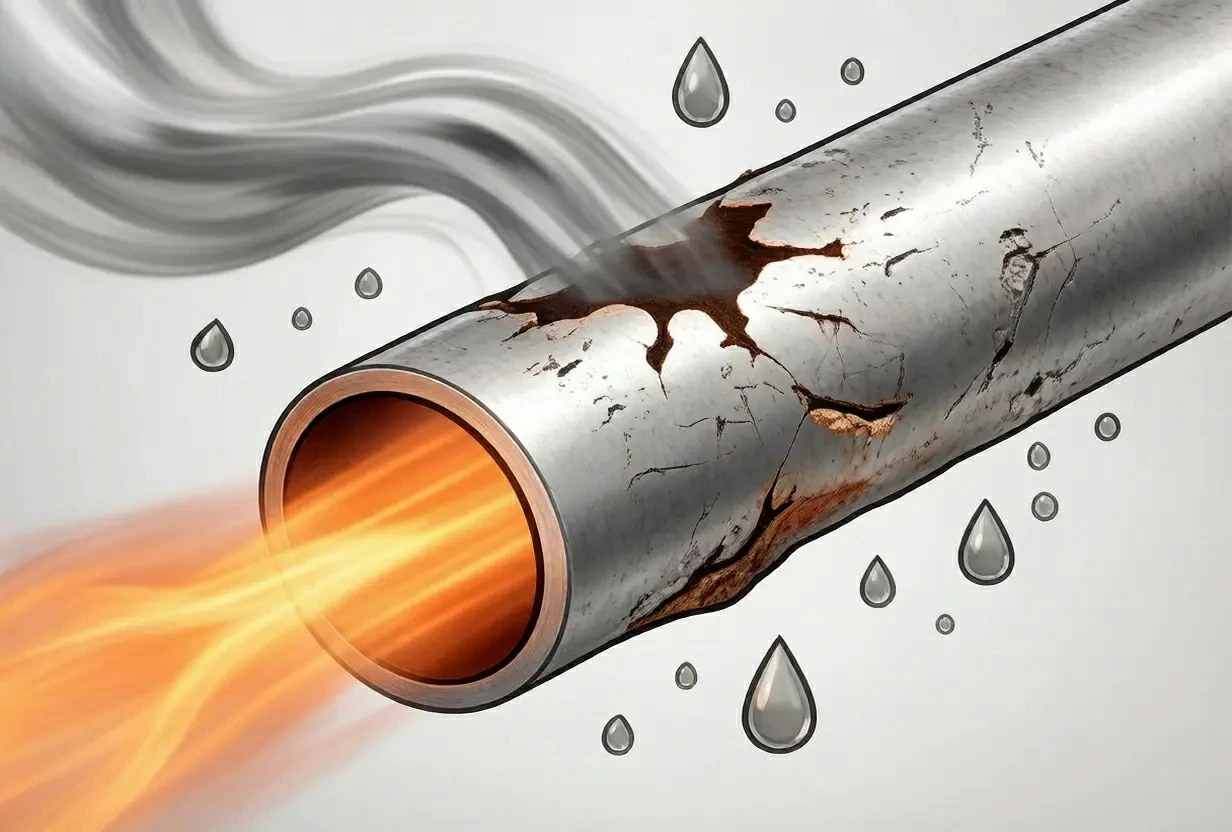
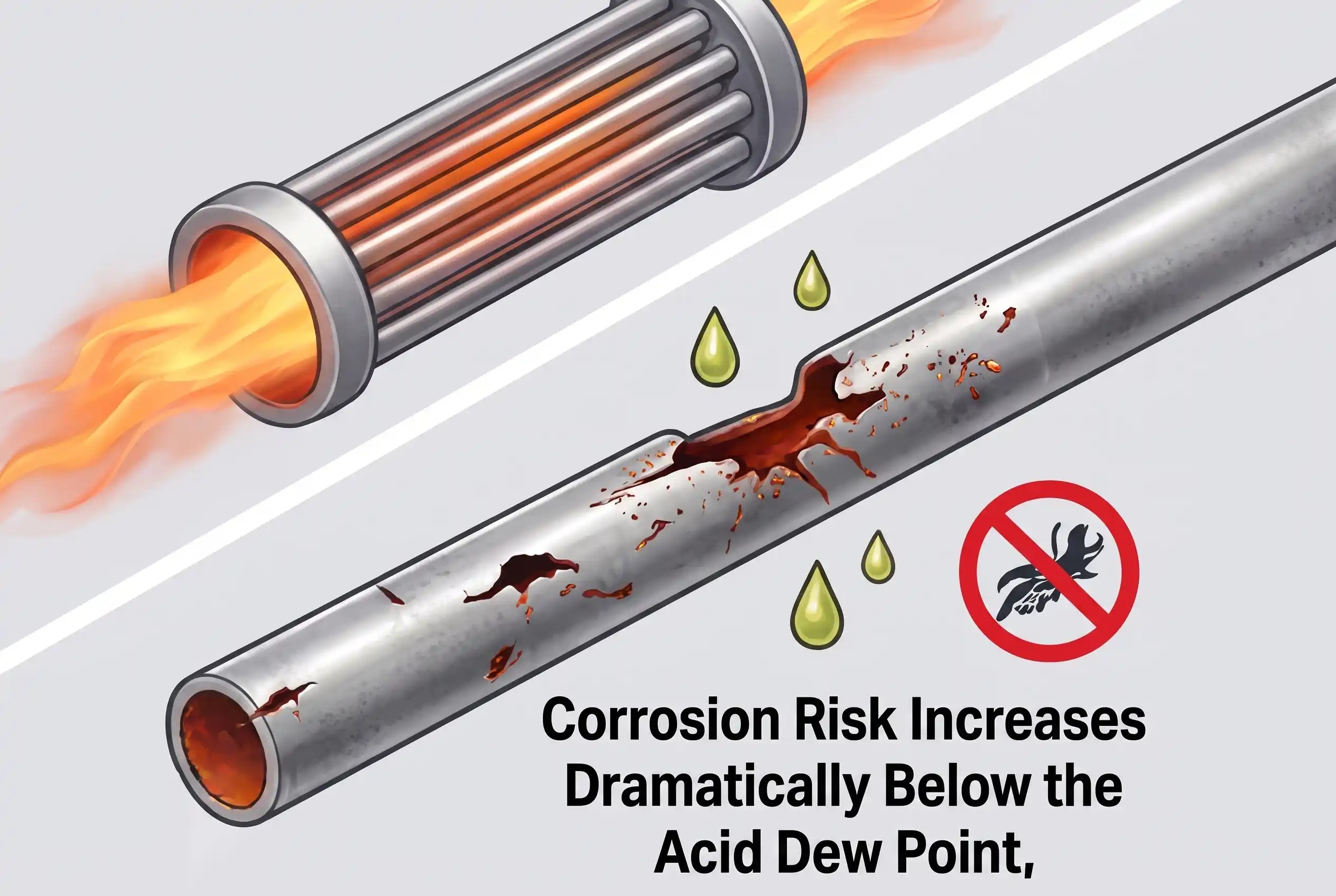
Many facilities discharge flue gas at temperatures well above the theoretical recovery limit. The reason is simple: As temperatures decrease, acidic condensate begins to form and attack heat transfer surfaces. This creates:

  • ● Acid dew-point corrosion
  • ● Equipment degradation
  • ● Increased maintenance
  • ● Reliability concerns
As a result, many systems sacrifice potential heat recovery to avoid corrosion damage.
WHAT IS DEEP HEAT RECOVERY?

Recovering Energy Beyond Conventional Limits

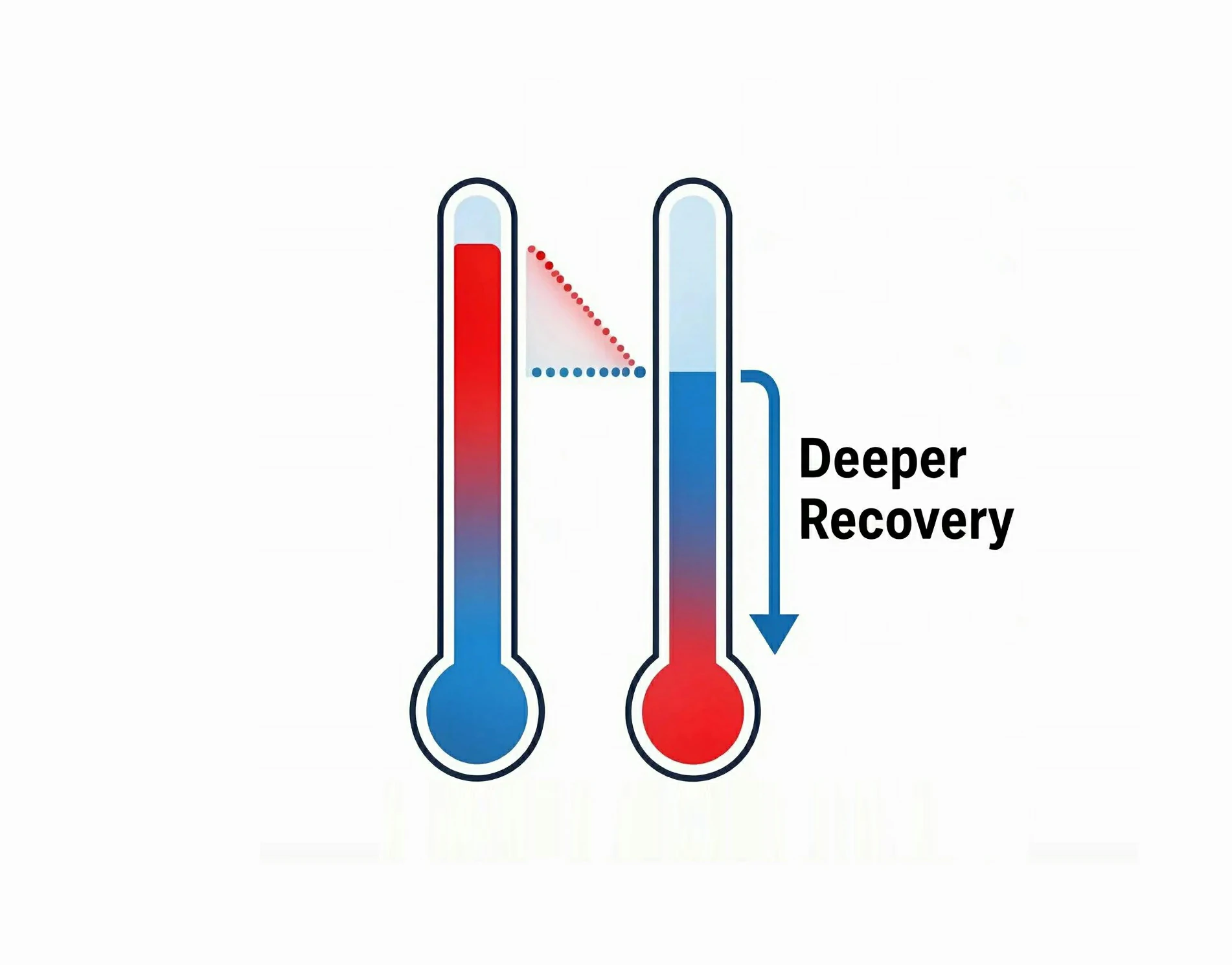
Deep heat recovery refers to reducing flue gas temperatures further than conventional systems while maintaining reliable long-term operation.


  • Higher exhaust temperatures.

    Lower corrosion risk.

    Lower energy recovery.

  • Lower exhaust temperatures.

    Greater energy utilization.

    Higher economic return.
THE TECHNOLOGY BEHIND IT

Corrosion Protection Enables Deeper Recovery

  • Conventional Metal Surfaces

    Corrosion risk increases dramatically below the acid dew point.
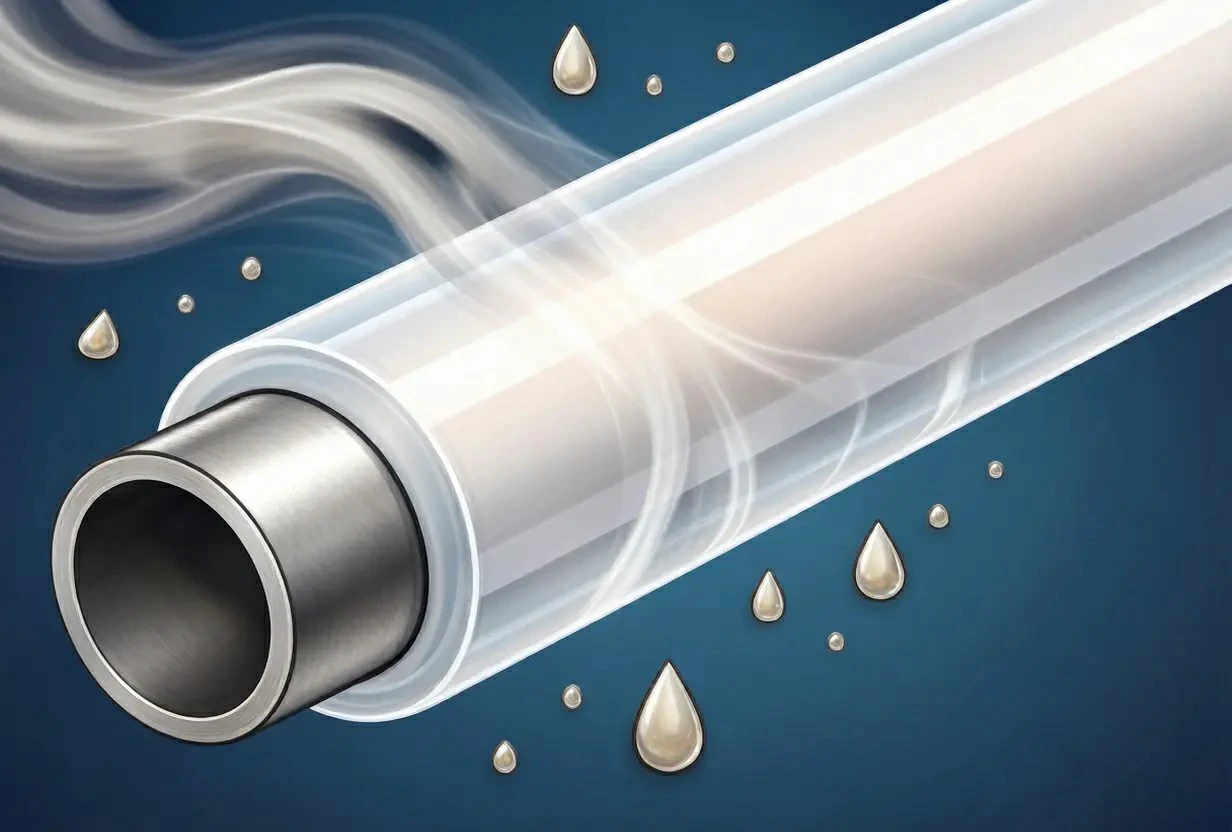
  • Fluoroplastic-Steel Composite Technology

    Corrosion-resistant fluoroplastic surfaces protect the heat transfer area while steel provides structural strength. This allows safe operation at lower temperatures.
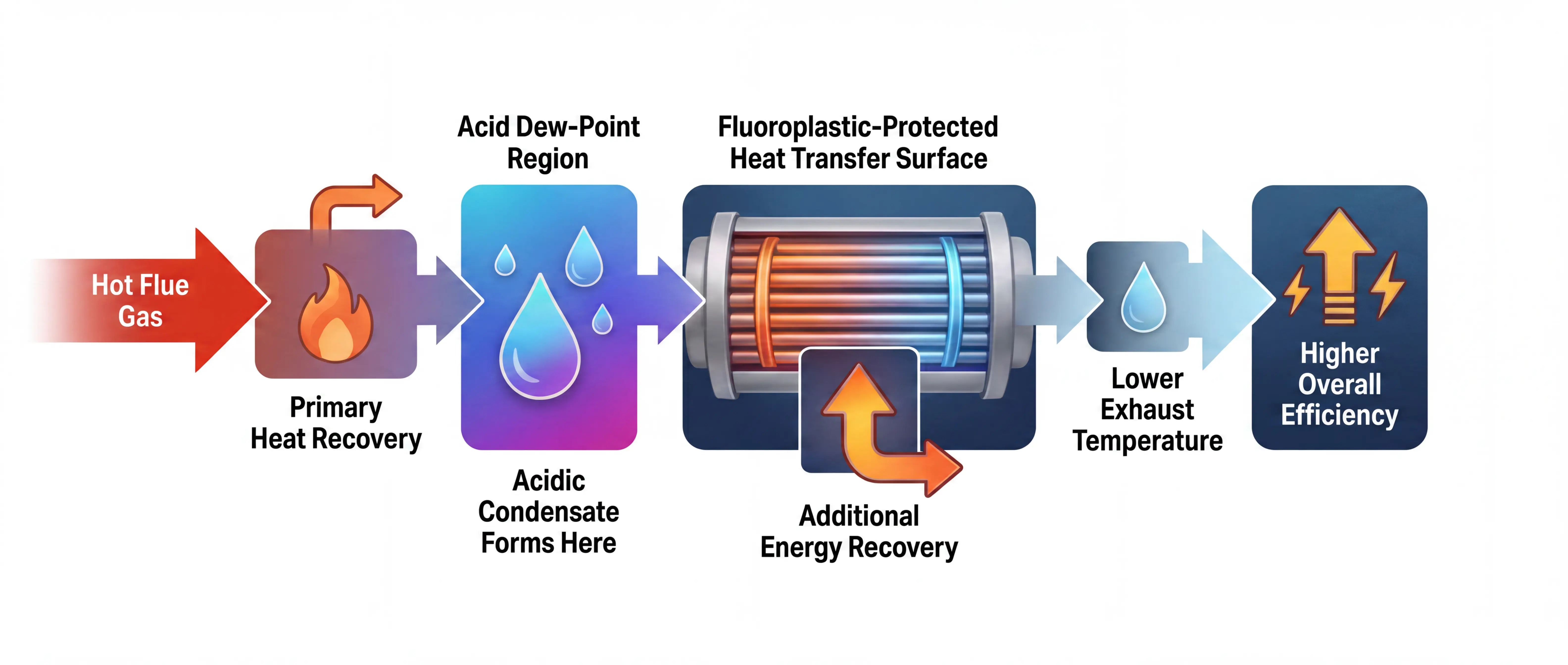

HOW DEEP HEAT RECOVERY WORKS

Energy Recovery Process

ENGINEERING BENEFITS

Why Facilities Pursue Deep Heat Recovery

  • More Energy Recovery

    Recover additional thermal energy from existing operations.

  • Lower Utility Costs

    Reduce external energy demand.

  • Improved Thermal Efficiency

    Increase overall heat utilization.

  • Better Lifecycle Economics

    Generate greater long-term value from recovered heat.
TECHNOLOGY IN PRACTICE

Products designed to address corrosion:

  • Fluoroplastic Steel Economizers

    Deep Heat Recovery

  • Fluoroplastic Steel Air Preheaters

    Condensation Recovery

  • Fluoroplastic Steel Condensers

    Combuation Optimization

  • Fluoroplastic Steel Steam Heaters

    Industrial Heating

Looking to Recover More Energy from Low-Temperature Flue Gas?

Discuss your operating temperatures, gas composition, and recovery objectives with our engineering team.

Request Engineering Consultation