Time: Jul 6 2026 Views: 1
PROJECT OVERVIEW
This case study presents a heat recovery system implemented in a coal-fired power generation facility operating under continuous high-load conditions.
The objective was to recover waste heat from flue gas while maintaining stable operation under corrosive, high-moisture exhaust conditions.
PROJECT CHALLENGE
High-Load Flue Gas Environment
The power plant presented the following operating conditions:
● Flue gas temperature: 130°C – 320°C
● Continuous 24/7 operation
● High moisture content in exhaust gas
● Presence of sulfur compounds (SO₂ / SO₃)
● Acid dew-point corrosion risk
● Large and stable gas flow volume
These conditions required a system capable of long-term stability and corrosion resistance.
ENGINEERING OBJECTIVE
The system was designed to achieve:
● maximum recovery of waste heat from flue gas
● stable operation under continuous high-load conditions
● resistance to acid dew-point corrosion
● low pressure drop for large gas flow systems
● long equipment lifecycle with minimal maintenance
SYSTEM SOLUTION
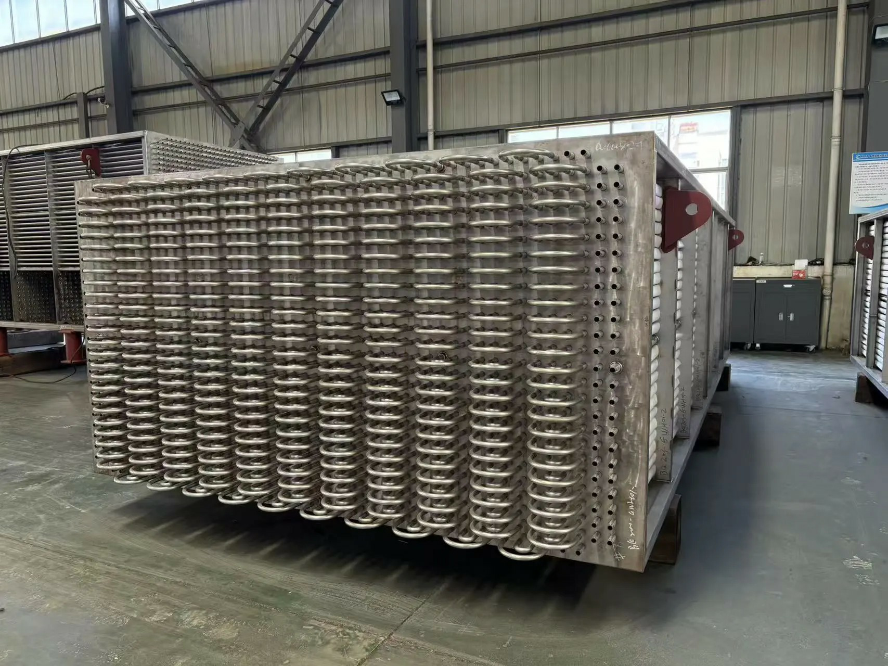
Fluoroplastic-Steel Composite Heat Recovery System
To meet operational requirements, a fluoroplastic-steel composite heat recovery system was deployed.
Structural Design
● Outer Layer: Fluoroplastic corrosion-resistant coating
● Inner Core: Steel structural support tube
This design ensured both corrosion protection and mechanical stability.
KEY ENGINEERING FEATURES
1. Corrosion Resistance
Fluoroplastic surface layer protects against acid condensation and chemical attack in low-temperature zones.
2. High Mechanical Strength
Steel core provides structural integrity under continuous pressure and thermal cycling.
3. Low Pressure Drop Design
Optimized flow channels ensure minimal resistance in large-volume flue gas systems.
4. Stable Heat Transfer Performance
System maintains consistent thermal performance under variable plant load conditions.
5. Long-Term Operational Stability
Designed for continuous operation in 24/7 industrial environments.
PERFORMANCE OUTCOME
After implementation, the system achieved:
● Improved waste heat recovery efficiency
● Stable long-term operation under corrosive conditions
● Reduced fouling compared to conventional steel systems
● Lower maintenance frequency
● Extended equipment service life
KEY ENGINEERING INSIGHT
Efficiency Is Limited by Corrosion, Not Heat Availability
In power generation systems, large amounts of recoverable heat are available.
The limiting factor is not energy supply, but:
● acid dew-point corrosion
● material degradation
● fouling under moisture conditions
Effective corrosion protection enables deeper and more stable heat recovery.
SYSTEM VALUE
The implemented system delivered:
● higher overall plant energy efficiency
● reduced fuel consumption for auxiliary heating
● improved environmental performance
● stable long-term operational reliability
CONCLUSION
Power generation systems represent one of the most important applications for industrial heat recovery technology.
By integrating corrosion-resistant materials with engineered system design, it is possible to achieve:
● higher energy utilization
● stable continuous operation
● improved lifecycle economics
● reduced maintenance requirements

@ 2025-2026 Langteng Machinery. All Rights Reserved.