Time: Jul 6 2026 Views: 3
INTRODUCTION
Efficiency engineering in industrial heat recovery systems focuses on maximizing usable energy output while minimizing losses across the entire system lifecycle.
Unlike simple thermal calculations, true efficiency is a system-level outcome influenced by:
● heat transfer performance
● pressure drop behavior
● corrosion constraints
● material selection
● system integration
● operational stability
PRINCIPLE 1 — EFFICIENCY IS A SYSTEM PROPERTY
Efficiency cannot be defined by a single component.
A high-performance heat exchanger does not guarantee a high-efficiency system.
System efficiency depends on the interaction between:
● flue gas flow dynamics
● heat transfer surfaces
● downstream energy utilization
● auxiliary energy consumption
> True efficiency is the result of system integration, not isolated optimization.
PRINCIPLE 2 — NET ENERGY RECOVERY DEFINES REAL EFFICIENCY
Industrial efficiency is not only about heat captured, but also about energy consumed during operation.
Net efficiency is determined by:
> Recovered thermal energy − System energy consumption
Key losses include:
● fan power due to pressure drop
● heat loss in ducts
● fouling-related performance degradation
Optimizing net efficiency requires balancing recovery and consumption.
PRINCIPLE 3 — TEMPERATURE REDUCTION IMPROVES EFFICIENCY
Lower flue gas outlet temperature increases heat recovery potential.
However:
● deeper cooling improves energy utilization
● but increases condensation risk
● and accelerates corrosion potential
Therefore, efficiency engineering must define a **safe thermal boundary**.
PRINCIPLE 4 — PRESSURE DROP IS AN ENERGY PENALTY
Every heat recovery system introduces resistance to flue gas flow.
Higher resistance leads to:
● increased fan power consumption
● reduced net system efficiency
● higher operational cost
Efficient system design minimizes unnecessary flow resistance while maintaining heat transfer capability.
PRINCIPLE 5 — CORROSION REDUCES LONG-TERM EFFICIENCY
Efficiency is not static — it degrades over time.
Corrosion leads to:
● reduced heat transfer performance
● surface fouling and scaling
● increased maintenance downtime
● shortened equipment lifecycle
A system with high initial efficiency but rapid degradation has poor lifecycle efficiency.
PRINCIPLE 6 — SURFACE DESIGN AND HEAT TRANSFER BALANCE
Heat transfer efficiency depends on:
● surface area
● flow distribution
● turbulence control
● material thermal properties
However, increasing surface complexity often increases:
● pressure drop
● fouling risk
● maintenance requirements
Efficiency engineering requires optimizing these competing factors.
PRINCIPLE 7 — MATERIAL SELECTION DEFINES EFFICIENCY LIMITS
Material properties directly influence achievable system efficiency.
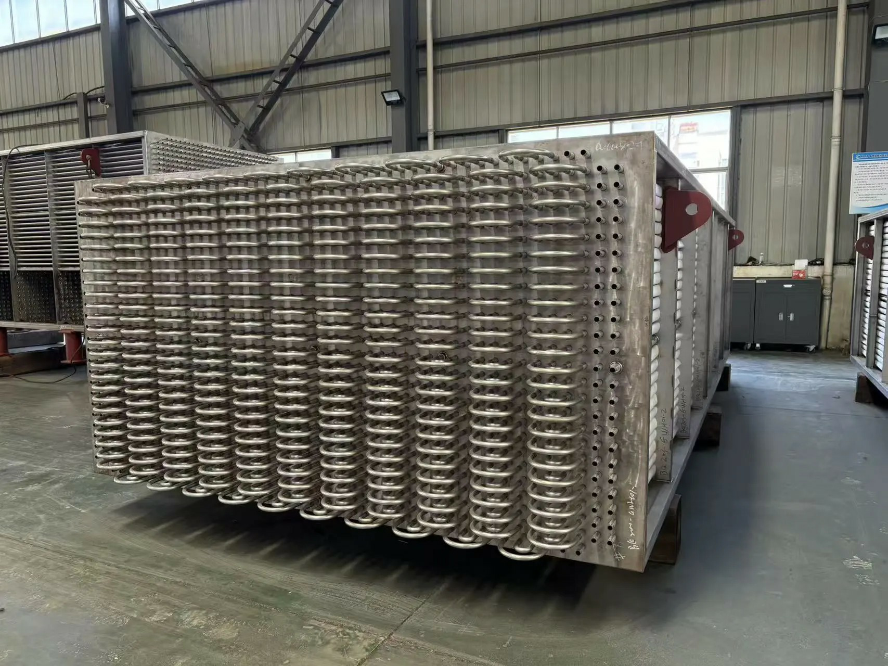
Stainless Steel
● High thermal conductivity
● Strong mechanical performance
● Efficiency decreases under corrosion exposure
Fluoroplastic Systems
● Excellent corrosion resistance
● Lower thermal conductivity
● Limited structural and pressure capability
Fluoroplastic-Steel Composite Systems
● Balanced thermal and mechanical performance
● Stable long-term efficiency
● Enables deeper heat recovery under corrosive conditions
PRINCIPLE 8 — LIFECYCLE EFFICIENCY IS THE TRUE METRIC
Industrial systems operate over long periods.
Therefore:
> True efficiency = performance over entire lifecycle
This includes:
● energy recovery rate
● maintenance frequency
● downtime cost
● replacement cycles
● operational stability
KEY INSIGHT
Efficiency Is a Balance, Not a Maximum
Efficiency engineering is not about maximizing heat recovery alone.
It is about balancing:
● energy recovery
● system losses
● corrosion risk
● lifecycle stability
The most efficient system is the one that delivers **stable performance over time**, not just peak performance at startup.
CONCLUSION
Efficiency engineering in heat recovery systems is a multidisciplinary discipline combining:
● thermodynamics
● fluid dynamics
● corrosion science
● material engineering
● system integration
Optimizing efficiency requires treating the system as a whole, not as individual components.

@ 2025-2026 Langteng Machinery. All Rights Reserved.