Time: Jul 6 2026 Views: 2
INTRODUCTION
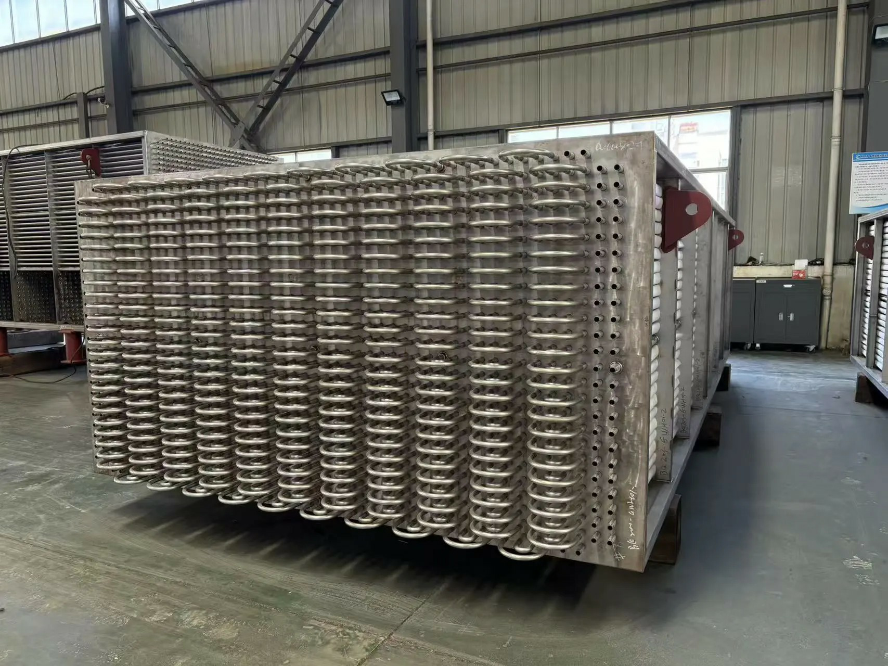
Heat recovery is the process of capturing waste thermal energy from industrial exhaust streams and converting it into usable energy such as hot water, steam, or process heat.
In industrial flue gas systems, heat recovery is not only a thermal challenge, but also an engineering balance between:
● energy efficiency
● corrosion resistance
● pressure drop control
● system stability
● lifecycle performance
Understanding the core principles is essential for designing reliable and efficient systems.
PRINCIPLE 1 — HEAT FLOWS FROM HIGH TO LOW TEMPERATURE
All heat recovery systems are governed by a fundamental rule of thermodynamics:
> Heat naturally transfers from high-temperature flue gas to a lower-temperature medium.
The greater the temperature difference, the higher the potential for energy recovery.
However, reducing flue gas temperature too far introduces corrosion risk, which limits practical system performance.
PRINCIPLE 2 — TEMPERATURE LIMITS DEFINE RECOVERY POTENTIAL
Industrial flue gas typically exits processes at:
* 120°C to 350°C
As temperature decreases:
● heat recovery increases
● but acid condensation begins
● corrosion risk rises sharply
The **acid dew point** becomes the critical boundary that determines how far heat can be safely recovered.
PRINCIPLE 3 — SURFACE AREA CONTROLS EFFICIENCY
Heat transfer efficiency depends on the available surface area between flue gas and the heat transfer medium.
Increasing surface area improves performance, but also introduces:
● higher pressure drop
● increased fouling risk
● greater corrosion exposure
Therefore, heat exchanger design requires careful optimization rather than maximization.
PRINCIPLE 4 — CORROSION IS THE PRIMARY LIMITING FACTOR
In low-temperature heat recovery systems, corrosion often becomes the limiting factor rather than thermal performance.
When flue gas temperature drops below the acid dew point, sulfur compounds condense into acidic liquids such as:
● sulfuric acid (H₂SO₄)
● sulfur trioxide (SO₃)
● acid mist and condensates
These aggressively attack conventional metal surfaces, leading to:
● equipment degradation
● reduced heat transfer efficiency
● shortened service life
● increased maintenance costs
PRINCIPLE 5 — MATERIAL SELECTION DEFINES SYSTEM BOUNDARIES
Different materials determine how far heat recovery can be pushed.
Stainless Steel
● High thermal conductivity
● Strong mechanical performance
● Low corrosion resistance under acid dew-point conditions
Fluoroplastic
● Excellent corrosion resistance
● Low surface energy (anti-fouling)
● Limited mechanical strength and pressure capacity
● Restricted installation flexibility
Fluoroplastic-Steel Composite
● Combines corrosion resistance and structural strength
● Enables stable operation under acidic conditions
● Supports deeper heat recovery
● Extends system lifecycle
PRINCIPLE 6 — SYSTEM DESIGN IS MORE IMPORTANT THAN COMPONENTS
Heat recovery efficiency is determined by the system as a whole, not individual components.
Key system-level factors include:
● flue gas flow distribution
● pressure drop management
● condensation control
● heat transfer path design
● corrosion protection strategy
Even high-performance equipment will underperform if the system design is not optimized.
PRINCIPLE 7 — LIFECYCLE PERFORMANCE DEFINES TRUE EFFICIENCY
Industrial systems operate over long periods, so efficiency must be evaluated across the full lifecycle.
True heat recovery efficiency includes:
● initial energy recovery rate
● long-term stability
● maintenance frequency
● equipment durability
● operating cost over time
A system with slightly lower initial performance but higher stability may deliver significantly better lifecycle economics.
KEY TAKEAWAY
Heat recovery is not only about capturing energy.
It is about engineering a balance between:
● thermodynamics
● corrosion science
● material engineering
● system integration
The most successful systems are those that maximize energy recovery while maintaining long-term reliability under corrosive operating conditions.
CONCLUSION
Understanding heat recovery principles is essential for designing efficient and durable industrial systems.
By integrating thermal design, corrosion protection, and system engineering, it becomes possible to achieve:
● deeper heat recovery
● stable long-term operation
● improved lifecycle economics
CTA
Want to improve the performance of your heat recovery system?
Discuss your operating conditions and engineering requirements with our team.

@ 2025-2026 Langteng Machinery. All Rights Reserved.